CAGS Webinar Series
“The Good and the Bad of Black Grad”
Produced and Hosted by Evelyn Asiedu, Ph.D.
About the Series
The many crises and disruptions that occurred in 2020 have exposed and highlighted systemic racism worldwide. Canadian universities were not exempt from this reckoning. While often claiming to prioritize diversity and inclusion on their campuses, the fact remains that relatively few Black people can be found at Canadian universities. Furthermore, the absence of race-based data has empowered the Canadian Academy to deny its own racism with little consequence, while simultaneously undermining any calls to action expressed by racialized people.
At this particular moment in time, however, many higher education institutions across Canada are poised to critically (re-)assess their anti-racism strategies. As the infrastructure for the collection of quantitative race-based data slowly but surely gains momentum, the perspectives of Black community members can offer invaluable first-hand qualitative information.
The aim of this five-part webinar series is to create a space for dialogue that encourages Black academics to share their stories and experiences. These webinars will provide a platform to amplify the multitude of Black voices that are scattered across the country, with the ultimate goal of creating a digital anthology of the experiences of Black students and post-docs in Canada today. It is our hope that these diverse stories will serve to make connections among Black scholars, to inform University administrators of the challenges experienced by Black students, and to inspire prospective students to pursue and eventually achieve their educational goals.
In the media spotlight
-
Radio interview with Evelyn – CBC Radio Active with Adrienne Pan [24 March 2021]
-
Print media interview with Evelyn – CBC News Edmonton [25 March 2021]
-
Interview with Evelyn – Folio, University of Alberta [14 June 2021]
-
Evelyn’s Convocation Address to the Class of 2021, University of Alberta [25 June 2021]

Evelyn Asiedu, Ph.D. – Producer and Host
In July 2020 Evelyn Asiedu published an article in Maclean’s titled “Canadian universities must collect race-based data,” which spoke to her experience as a Black female graduate student. Having ignored the feelings of rejection and isolation for her entire academic career, this op-ed was the first time she openly described her solitary journey as a Black female scientist. Following its publication, she received several emails from others with similar experiences across Canada – including some from students who were struggling with racism and seeking advice. The piece had struck a nerve. Building on the current momentum behind the Black Lives Matter movement, Evelyn was inspired to create “The Good and the Bad of Black Grad,” a webinar series designed with and for Black students.
Evelyn Asiedu is a native of Brampton, Ontario. She received her Honors B.Sc. in Chemistry from Western University in 2013, and later that year moved to Edmonton to commence a Ph.D. program at the University of Alberta. Her thesis work aimed to identify chemicals in oil sands wastewater and to understand how long those chemicals take to degrade. Her volunteer activities have centered around environmental sustainability, community-building, and the promotion of diversity in science. Her writing on the latter topic has been published in Medium and the Chemical Institute of Canada.
Evelyn Asiedu Speaks with Eternity Martis,
Award-Winning Journalist and Author
5 February 2021
In universities across Canada, race-based data is not collected, so it’s almost impossible to understand the needs and challenges of students of colour—and there are many. Even more, there is no formal policy across all universities to deal with racism. According to a CBC investigation, while students of colour experience many race-based incidents on campus, most don’t file a formal complaint because they don’t feel they will be believed.
In this talk, Eternity shares her own journey as a university student on a predominantly white campus—which she details at length in her memoir, They Said This Would Be Fun: Race, Campus Life, and Growing Up. Debunking the myth of Canada’s racial tolerance and the idea that student life is “breezy”, she leads us through her own experience as a Black young woman on campus and ties it to the devastating history of racism at Canadian universities, the re-emergence of blackface parties, and the rise of the alt-right, white supremacy and hate crimes at schools, both from far-right groups and students. From there, Eternity will examine the impact of racism on campus on students, detailing well-researched links to poor health and a drop in academic performance, both of which she experienced herself as a student. The talk will end with possibilities for how we can all better support students of colour, from parents, friends, professors and allies, to what administrators and decision-makers can start doing now to make campuses more welcoming for students of colour.
Note: the core content of the original talk is not included in this recording to protect author copyright.
Episode 1: Being the Only One
25 March 2021
In the first episode of the series, three current and former graduate students will review the paths that led them to their research. We will discuss how they navigated various levels of their education as Black women and search for threads of commonality in their stories. Using some targeted questions as a point of departure, this webinar will feature an organic and free-flowing conversation about race and its impact on the panelists’ journeys. The dialogue will conclude with some observations and recommendations for improving the experience of Black students and scholars in Canada.
This live webinar and its recording will be preserved and shared with current students and scholars who may be searching for guidance, support, and community on this particular topic.
Speakers
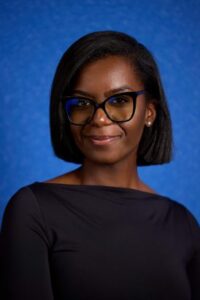
Kayonne Christy completed her undergrad at McMaster University where she received her B.Sc. (honours) in Life Sciences and B.A. (summa cum laude) in Health Studies. She is currently completing her MA in sociology at the UBC. Kayonne will begin her PhD this fall in sociology at the University of Michigan- Ann Arbour. Her research interests exist in the nexus between race, gender, diaspora and health.
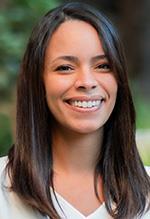
Melanie Morrison – a first-generation graduate who received her PhD in Medical Biophysics from the University of Toronto. For the last five years she has trained as a postdoc in the Radiology department at the University of California San Fransico focusing on projects involving the management of brain tumors and neurodegenerative disorders using state-of-the-art magnetic resonance imaging technology.
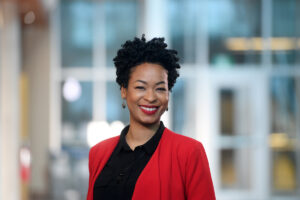
Tiffany Gordon – a fifth-year PhD student at Dalhousie University’s Philosophy program. Her areas of study include social and political thought, philosophy of race and feminist philosophy. In her dissertation, she will be examining the over-incarceration of Black and Indigenous people through the lens of collective responsibility for race-based oppression. Tiffany received her Master’s in Philosophy at McMaster University and her B.A. (Honours) from York University, where she double-majored in Philosophy and Political Science.
Episode 2 – Recruit, retain, and represent!
28 April 2021
In this episode, we’ll ask our panelists who were the key figures who inspired them along their path. Through our discussion we will define characteristics of leaders in our communities and discuss the importance of diversity in positions of power. We will talk about the necessity of Black representation and how institutions begin to think about recruitment of talented Black scholars to Canadian campuses.
This live webinar and its recording will be preserved and shared with current students and scholars who may be searching for guidance, support, and community on this particular topic.
Speakers

Alexandra Davis, Postdoctoral Fellow, Western University, is a marine ecologist that uses quantitative and experimental approaches to directly contribute to the management of vulnerable marine ecosystems. My approach integrates behavioral, community, and spatial ecology, which I believe is essential for understanding how ecosystems work and ultimately for managing them. Examining systems from multiple perspectives is a key element behind many of the questions in my research. Overall, my work has shown that the integration of traditional ecology, spatial-temporal analyses, and collaborative citizen-based science is fundamental for establishing conservation goals such designing marine protected areas, conserving native coral-reef and marine ecosystems, and targeted removal plans for invasive species. More personally, I am a multi-racial woman, and belong to multiple marginalized groups, especially within the field of conservation science. I am often the only black person in my department and at conferences I attend. Because of this I have made it a priority to seek out and create spaces for marginalized groups within my institutions. Another major goal of mine is to expand from my background in traditional ecological and conservation research and integrate research on equity, justice, and inclusion within conservation sciences. Explicitly, I am interested in who is receiving funds and conducting research and whether these demographics match with the communities most impacted by the conservation issue of interest.

Peter Soroye is a PhD Student in Biology working with Prof Jeremy Kerr at the University of Ottawa. Peter is a conservation biologist and ecologist studying the impacts of climate change and land use change on pollinators like bumblebees and butterflies, with the goal of informing conservation management and policy to find more effective ways of protecting species and reversing declines of biodiversity. Peter is a passionate science communicator, regularly volunteering with programs like Let’s Talk Science, Exploring By The Seat Of Your Pants, and more. Throughout his graduate school, he has remained committed towards increasing equity, inclusion, and representation in science, from various leadership positions on university committees and student associations, national societies (most prominently the Canadian Society for Ecology and Evolution), and volunteer organizations. For more info on Peter, visit his website: www.petersoroye.com.

Olivia Ghosh-Swaby, originally from Mississauga ON, is currently completing her Ph.D. in Neuroscience at the Schulich School of Medicine and Dentistry (SSMD), Western University. Her research interests include the impact of diet and metabolism on memory in obesity and whether exercise and anti-diabetic drugs can boost neural stem cell growth. She is an advocate and public speaker for equity, diversity, and inclusion (EDI) in STEM and university athletics, speaking on the topic in over 15 news articles and 10 major speaking events. She is an executive member of the BrainsCAN and Schulich EDI Committees and is a graduate representative for the Neuroscience Graduate Program and the Robarts Association of Trainees. Outside of academia, she manages and operates the Ontario Women’s Intercollegiate Football Association and sits on Football Canada’s Diversity Task Force for women and BIPOC athletes. She has a unique student-athlete perspective that has allowed her to champion various initiatives on the student and athlete life for underrepresented groups.
Episode 3
Black don’t crack???: The Blessings and blues of black mental health
26 May 2021
The exhilarating journey of graduate school also has a complimentary side: It can be a grind with stress, fatigue, and anxiety commonly felt by students during their degrees. Campuses offer some support to assist students along the way, but few are equipped to address the unique and added pressures that racialized people experience at school. The inability to acknowledge racism on campus further alienates Black students in academic spaces. In this episode we’ll ask ourselves: Are Black academics so strong that they cannot break? How do students manage emotional and psychological fatigue? And what should universities be doing to help?
This live webinar and its recording will be preserved and shared with current students and scholars who may be searching for guidance, support, and community on this particular topic.
Speakers

Tari Ajadi (he/him) is a PhD candidate in Political Science at Dalhousie University. His dissertation research compares how Black activists in Halifax, Nova Scotia and London, Ontario strategize to prompt change in policing and in health policy. As a 2014 3M National Student Fellow, he has published articles in The Globe and Mail, The Chronicle-Herald, University Affairs and other major syndications. He is a member of the Board of Directors of the Health Association of African Canadians, as well as the East Coast Prison Justice Society. A British-Nigerian immigrant to Canada, Tari aims to produce research that supports and engages with Black communities across the country.

Jamilah Dei-Sharpe (she/her) is an emerging Sociologist specializing in critical race studies, critical gender studies, and decolonial pedagogy at Concordia University. Her PhD research project is titled, Black Masculinities in Canada: A Documentary of Black Empowerment and Community Engagement. Jamilah is active in research consultancy to support Black, Indigenous, Queer and other racialized communities on- and off-campus. As such, she is the coordinator of the Black Caucus and she co-founded the Decolonial Perspectives and Practises Hub at Concordia. Jamilah is also co-founder of the National Black Graduate Network.

Shawn Hercules, BSc, MPH (he/they) is completing a Ph.D. in Dr. Juliet Daniel’s cancer Molecular Biology research lab at McMaster University. Shawn’s doctoral work is focused on investigating the epidemiological and genetic profiles of Nigerian, Barbadian and Jamaican women with aggressive and difficult to treat triple negative breast cancer. Shawn is passionate about the inclusion of previously under-studied populations in genomics research and engaging health disparities work. Shawn is also passionate about science communication and challenging racial and cis/heteronormative stereotypes in science.
Episode 4
The Tips and Tricks of Inclusive Excellence
26 January 2022
This webinar series took a hiatus for a few months and we’ve returned and want to invite you to yet another stimulating conversation (hopefully before midterms). This fall, many of us have returned to campus and it looks much different in a number of ways.
Notwithstanding the transition to in-person learning, universities appear to be tweaking other strategic priorities including their perspectives on EDI. In this episode, acknowledgement of the accomplishments of academics is on the docket, specifically we’ll be talking about “inclusive excellence.” What does that look like, who decides, and why? What exactly is Black excellence?
In this penultimate episode of the season, our panelists will explore these questions and more while digging into the ideas and expectations that underpin concepts of academic excellence, and the impact that these presumptions have on Black faculty and graduate students.
Speakers

Falan Bennett – a Master of Public Health graduate from the Social and Behavioural Health Sciences program at the Dalla Lana School of Public Health, University of Toronto. She is a CGS-M scholarship recipient and is currently completing research in Dr. Arjumand Siddiqi’s Social Epidemiology Lab. Falan’s work elucidates the structural factors behind the Black maternal health crisis. She holds two undergraduate degrees from York University in Biology and Psychology. Her research interests broadly span reproductive justice for Black communities, the social and structural determinants of health, and health equity. She co-founded and currently co-leads Grad Schooling while Black, an organization dedicated to supporting Black graduate applicants to and through higher education.
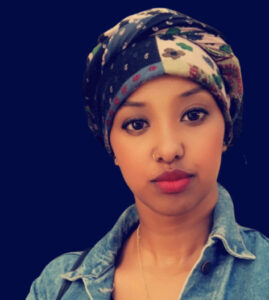
Zahro Hassan – PhD Student University of Alberta. Her research and teaching interest lie at the intersection of race, gender, immigration, and decolonization. She is working on multiple projects that examine societal and institutional structures that foster spaces of racism, exclusion, and marginalization. Her main research project involves a qualitative exploration of Young Adult Refugees’ experiences accessing post-secondary education in Canada.
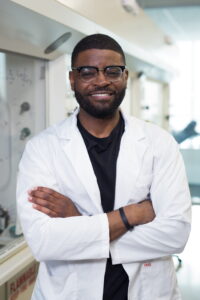
Michael Ocheje – a PhD Student University of Windsor. He joined the Rondeau-Gagné research group in Fall 2016 after completing his bachelor’s degree in Chemistry. During his undergraduate studies, he worked in the laboratory of Prof. James W. Gauld. His research focused on the computational analysis of the catalytic mechanism for Lysyl-AMP and hHINT1. Presently an NSERC PGS-D scholarship holder, his research in the Rondeau-Gagné group focuses on the development of novel stretchable and healable organic semiconductors by introducing non-covalent bonding moieties in conjugated polymers for use in bio-inspired, soft electronics.
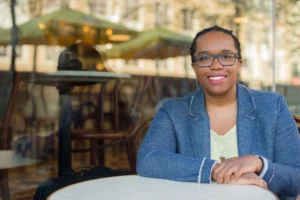
Dr. Cheryl Thompson – an assistant Professor at Ryerson University. She is the author of Uncle: Race, Nostalgia, and the Politics of Loyalty (2021) and Beauty in a Box: Detangling the Roots of Canada’s Black Beauty Culture (2019). Dr. Thompson has appeared on numerous podcasts and media platforms in Canada and internationally. Dr. Thompson holds a PhD in Communication Studies from McGill University. She previously held a Banting Postdoctoral Fellowship at the University of Toronto’s Centre for Theatre, Drama & Performance Studies, and the University of Toronto Mississauga’s Department of English & Drama. In 2021, Dr. Thompson was named to the Royal Society of Canada’s College of New Scholars, Artists and Scientists.
Episode 5
A Year in Review: What’s next and where are we at?
27 January 2022
…Or more logically, where are we at, and what’s next? In our final episode the panelists discuss their hopes and fears as Black scholars in the post-Floyd Academy. We’ll talk about successes and potential opportunities and ultimately make our final calls to action to Canadian Universities.
Speakers
Aisha Barise Upon completing a BA (Honours) in Linguistics from Concordia University and studying Japanese at McGill University, she then pursued a Master’s of Science in Linguistics at the University of Alberta. Currently, she is pursuing a PhD in Educational studies with a concentration in Language Acquisition under the Department of Integrated Studies in Education at McGill University.

Brittany Morrison is a communications and stakeholder relations professional. Brittany completed her undergraduate studies at Ryerson University in public administration and governance, and is currently pursuing graduate studies at Royal Roads University. Brittany’s research interests include Indigenous food sovereignty and food ways in Canada, and oenology.
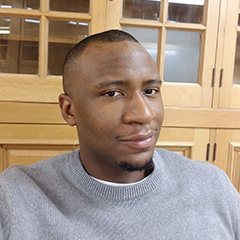
Prof-Collins Ifeonu is a Doctoral Candidate in Sociology at the University of Alberta. His fundamental research interest is in the interplay of social positions and social exchanges in a variety of contexts. His doctoral thesis is a qualitative investigation of Black International students’ relationship to anti-racism movements in Alberta. Prof-Collins is the current President of the University of Alberta’s Black Graduate Students’ Association.
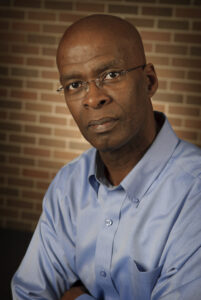
Dr. Carl E James is the Affirmative Action, Equity and Inclusivity Officer at York University where he is a professor in the Faculty of Education and holds cross-appointments in the Graduate Programs in Sociology, Social and Political Thought, and Social Work. Also, he is currently one of 6 Advisors to the Ontario Minister of Education and Premier. A Fellow of the Royal Society of Canada, and awarded an Honorary Doctorate from Uppsala University, Sweden, James is widely recognized locally, nationally and internationally for his work and leadership in equity and social justice.