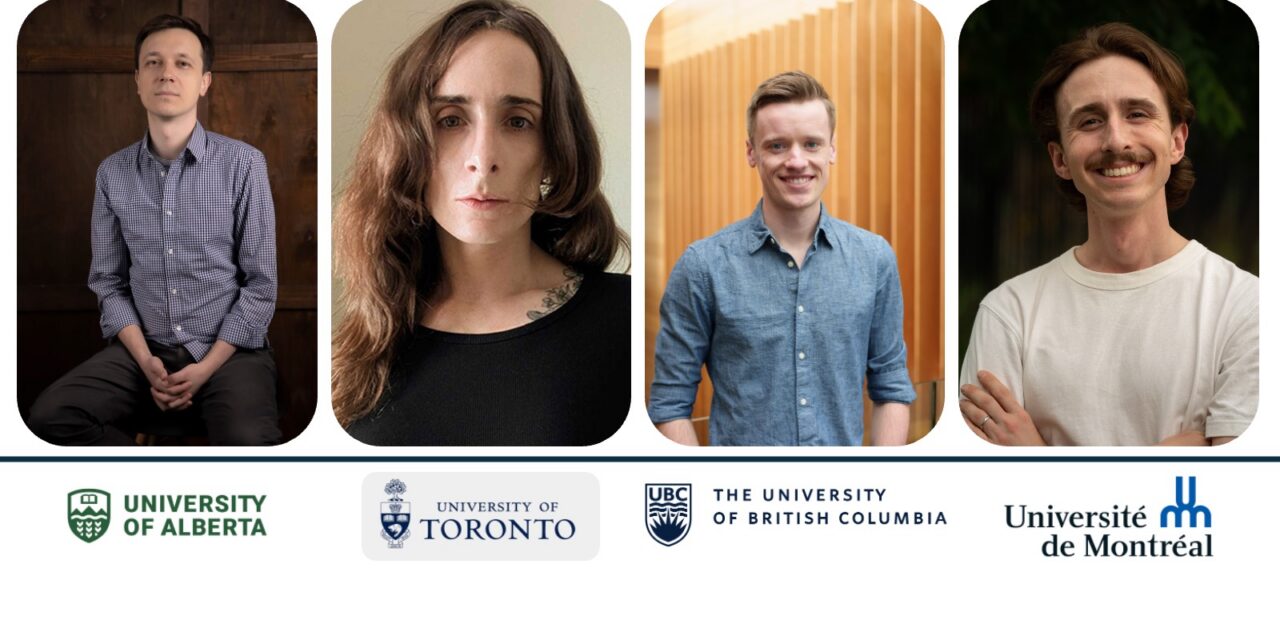
2026 CAGS-ProQuest Distinguished Dissertation Award
Winner – Arts, Humanities and Social Sciences Category
Dr. Ivan Shmatko, Department of Sociology, University of Alberta
Supervisor: Dr. Sandra Bucerius, Professor, Department of Sociology, University of Alberta
Dissertation: Vernacular Army: Order Accomplishment in the Ukrainian Military During the Russian Invasion of Ukraine (under embargo)
“Let me reiterate my strong view that this thesis is, in my view, excellent. The dissertation is rich, well written, clear, and engagingly presented… It is a very exciting work of scholarship and will offer important contributions across fields of sociology and to a continuing and real-world question.” Dr. Ron Levi, Distinguished Professor of Global Justice, University of Toronto
Dr. Ivan Shmatko’s dissertation, Vernacular Army: Order Accomplishment in the Ukrainian Military During the Russian Invasion of Ukraine, explores how the Ukrainian Armed Forces maintained cohesion, coordination, and resilience during one of the most challenging periods in the country’s history. Drawing on extensive ethnographic fieldwork conducted during the full-scale Russian invasion, Dr. Shmatko examines how soldiers, commanders, and military institutions adapted to the disruption of war through informal networks, trust, and local knowledge. His research challenges conventional assumptions that effective institutions depend primarily on rigid hierarchies and formal procedures, demonstrating instead that flexibility, improvisation, and grassroots problem-solving can become essential sources of organizational strength in times of crisis. Beyond advancing sociological theory, the dissertation offers valuable insights for scholars and policymakers concerned with military organizations, governance, and institutional resilience in conflict and post-conflict settings.
Dr. Shmatko has already established an international reputation as an emerging scholar of sociology, criminology, and the study of institutions in times of conflict. During his doctoral studies, he published research in leading journals including the British Journal of Criminology, contributed chapters to major scholarly volumes published by Oxford University Press and Lexington Books, and produced influential research reports examining the experiences of Ukrainian judges, veterans, and wounded soldiers. His work has been supported by numerous competitive scholarships, fellowships, and research grants, including the Alberta Graduate Excellence Scholarship and a SSHRC Insight Development Grant. Beyond academia, Dr. Shmatko has collaborated with civil society organizations on issues relating to governance, veterans’ rights, and democratic institutions in Ukraine, while also mentoring Ukrainian students through the Invisible University initiative. He joined the Department of Sociology and Anthropology at Washington and Lee University as an Assistant Professor in 2025, where he continues his research on war, institutions, and social order.
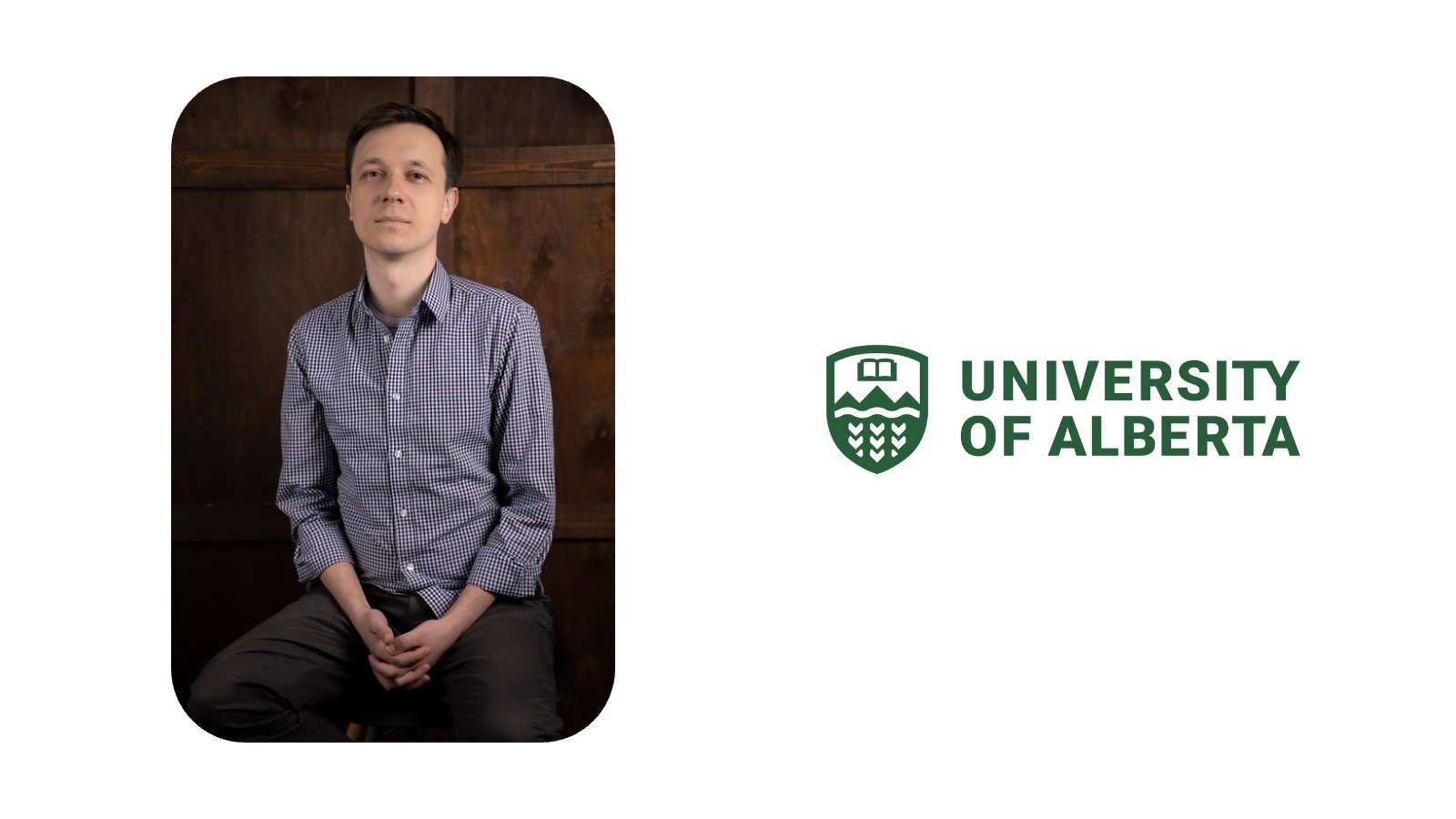
“The golden spot in most PhD research and — I would dare to say — generally in life, is to do what inspires you and yet to remain rooted in the world as it exists beyond your immediate hopes and concerns. The goal is to know that the world is a giant, occasionally violent, whirlpool that keeps on swirling no matter what you want; and yet, you can shape it if you are truly passionate about what you do. The aim is to know that, if you are searching, many things on the way may be consistently only somewhat predictable, like whirlpools; and yet you should allow yourself to jump in them no matter what. I think that to be rooted in the world and to embrace all the surprises it carries is to become a good researcher.” Dr. Ivan Shmatko
Winner – Arts, Humanities and Social Sciences Category
Dr. Blair Attard-Frost, Faculty of Information, University of Toronto
Supervisor: Dr. Kelly Lyons, Faculty of Information, University of Toronto
Dissertation: The Impacts and Governance of Artificial Intelligence: A Transfeminist Perspective
“I think it is important to stress the originality of the work done by Attard-Frost…The dissertation intervenes in and advances previous work investigating gaps in AI governance, the causes of these gaps as well as what can be done to strengthen oversight and expand civic participation to prevent harm.” Dr. Joanna Redden, Associate Professor, Faculty of Information and Media Studies, Western University
Dr. Blair Attard-Frost’s dissertation, The Impacts and Governance of Artificial Intelligence: A Transfeminist Perspective, examines how artificial intelligence can be governed to maximize its benefits while minimizing harm to society, particularly for historically marginalized communities. Drawing on perspectives from information studies, feminist and trans studies, organizational theory, and public policy, Dr. Attard-Frost developed new frameworks for understanding AI governance and applied them to analyses of AI initiatives across Canada. Her research demonstrates how current governance approaches often prioritize innovation and industry over broader societal and environmental impacts, while offering practical recommendations for building more equitable, transparent, and accountable AI governance systems. By combining rigorous interdisciplinary scholarship with real-world policy analysis, the dissertation makes an important contribution to one of the most pressing public policy challenges of our time.
Dr. Attard-Frost has already established herself as a leading emerging scholar in artificial intelligence governance and ethics. During her doctoral studies, she authored or co-authored nine peer-reviewed journal articles, five book chapters, four research reports, and numerous policy briefs and public commentaries. Research arising from her dissertation has been cited more than 300 times and has informed federal policy discussions on artificial intelligence, including submissions to Parliament, the Treasury Board of Canada Secretariat, and Innovation, Science and Economic Development Canada. A sought-after expert on AI governance, she has delivered dozens of invited lectures and public presentations and was recognized in 2025 as one of the 100 Brilliant Women in AI Ethics. Dr. Attard-Frost joined the University of Alberta as an Assistant Professor in the Department of Political Science in 2025 and is also a Canada CIFAR AI Chair and Fellow of the Alberta Machine Intelligence Institute (Amii), where she continues her research on AI governance, ethics, and public policy.

“I often thought about my trans dissertation through the lens of Susan Stryker’s work on trans monstrosity. A dissertation is a gigantic, disgusting monster that you must learn to find beauty in. You are stitching together a strange creature: parts won’t fit together correctly and will be gross and messy and ugly. Instead of fixating on all the obvious flaws and horrors, look for moments of joy and playfulness in your experimentation. Embrace monstrosity and revel in slop. Look for good ideas in clumsy writing, look for strong features in awkward drafts. Once you find ways of loving your weird little monster, failures will feel like small victories. This will be a grueling process, but it will be made easier if you are not alone in it. Look for mentors and peers you trust (never be afraid to cold intro yourself at events or online!), trust their love for your monster, then trust yourself and trust the process. Walk past your bullies and smile at your haters — your monster is beautiful.” Dr. Blair Attard-Frost
Winner – Engineering, Medical Sciences and Natural Sciences Category
Dr. David Black, Department of Electrical and Computer Engineering, University of British Columbia
Supervisor: Dr. Septimiu (Tim) Salcudean, Department of Electrical and Computer Engineering, University of British Columbia
Dissertation: Bilateral Human Teleoperation – A Mixed Reality System for Remote Ultrasound
“David Black’s thesis is extraordinary. It’s rare that I’ve read one with as ambitious a scope. Despite the breadth of its work (e.g. from mechanical design to control to human factors), each chapter meets the highest standards for research in its own field… The writing of the thesis material is very high quality. Difficult concepts are explained carefully and jargon (unavoidable!) is defined carefully at the right points in the exposition.” Dr. Blake Hannaford, Professor, Department of Electrical and Computer Engineering, University of Washington
Dr. David Black’s dissertation, Bilateral Human Teleoperation – A Mixed Reality System for Remote Ultrasound, introduces an entirely new approach to delivering healthcare in remote communities. Rather than relying on expensive medical robots or requiring patients to travel long distances for diagnostic imaging, Dr. Black developed a mixed reality system that allows an expert sonographer to remotely guide a person with no ultrasound training through a diagnostic-quality examination. Using mixed reality, haptic feedback, advanced communications, and novel sensing technologies, the system enables an expert hundreds of kilometres away to effectively extend their hands to another person. In a landmark clinical study conducted between Vancouver and the First Nations community of Haida Gwaii, local residents with no prior ultrasound experience successfully produced diagnostic-quality images in 92% of cases under remote guidance. By creating the novel concept of “human teleoperation,” Dr. Black’s research has the potential to transform access to healthcare for rural, remote, and Indigenous communities in Canada and around the world while reducing the financial and environmental costs associated with patient travel.
Dr. Black has rapidly emerged as one of Canada’s leading young researchers in medical robotics and telemedicine. His doctoral research resulted in eight peer-reviewed journal publications, two patents, numerous conference papers, and multiple international awards, including the MITACS Outstanding Innovation Award, the Hamlyn Symposium Best Paper Award, and the IEEE Conference on Telepresence Best Student Paper Award. A Vanier Canada Graduate Scholar and recipient of an NSERC Postdoctoral Fellowship, Dr. Black has already begun translating his research into practice by co-founding Coact Technologies, a startup dedicated to bringing mixed reality tele-ultrasound to remote communities. As a postdoctoral fellow at the University of British Columbia, he continues to advance technologies that expand equitable access to expert healthcare while opening an entirely new field of research in human teleoperation.

“A PhD provides a unique opportunity to dive as deeply as you can into a fascinating topic, but at the same time affords unmatched flexibility and freedom to explore – not just academically, but through side projects, attending conferences, teaching and supervising, doing internships or exchanges, and more. In my experience, seizing as many of these opportunities as possible while remaining focused on your thesis research is a good recipe for a rewarding doctorate.” Dr. David Black
Winner – Engineering, Medical Sciences and Natural Sciences Category
Dr. Pierre-Antoine Bernard, Department of Physics, University of Montréal
Supervisor: Dr. Luc Vinet, Professor, Department of Physics, University of Montréal
Dissertation: Spins et fermions libres sur des réseaux associés à des fonctions bispectrales
“The thesis is more than 500 pages long and each chapter is based on a published manuscript…The style is very coherent and the writing clear…The results provide an encompassing tour as well as extension of exactly solvable models and is a very impressive and comprehensive piece of work that could be awarded several PhD theses.” Dr.n Matthias Christandl, Professeur, Department of Math Sciences, University of Copenhagen
Dr. Pierre-Antoine Bernard’s dissertation, Spins and Free Fermions on Networks Associated with Bispectral Functions, explores the mathematical foundations of quantum systems and how their underlying structure shapes their physical behaviour. Working at the intersection of theoretical physics, mathematics, and quantum information science, Dr. Bernard developed new mathematical frameworks to study quantum entanglement in complex many-body systems. Among his most significant contributions was the creation of the theory of multivariate P-polynomial association schemes, a breakthrough that substantially expands a long-standing mathematical framework used to classify highly symmetric structures. His research also introduced new methods for analyzing quantum systems and signal processing, revealing unexpected connections between algebraic combinatorics, quantum physics, and information theory. By unifying ideas across multiple disciplines, Dr. Bernard’s dissertation advances fundamental knowledge while providing powerful new tools for future research in quantum computing, mathematics, and theoretical physics.
Dr. Bernard has already established an exceptional international research profile early in his career. His dissertation is built upon 18 peer-reviewed publications in leading journals spanning physics, mathematical physics, and mathematics – an extraordinary achievement for doctoral research. His work has been recognized by internationally renowned scholars for fundamentally advancing the theory of association schemes, with one leading expert describing it as among the most transformative developments in the field in recent years. Throughout his doctoral studies, Dr. Bernard received numerous prestigious awards and scholarships, including NSERC and FRQNT doctoral fellowships, and he has presented his research at leading international conferences across North America and Europe. Following completion of his PhD, he joined the Centre for Quantum Information and Quantum Control at the University of Toronto as a Postdoctoral Researcher, where he continues his work on quantum information processing and mathematical methods for quantum technologies.
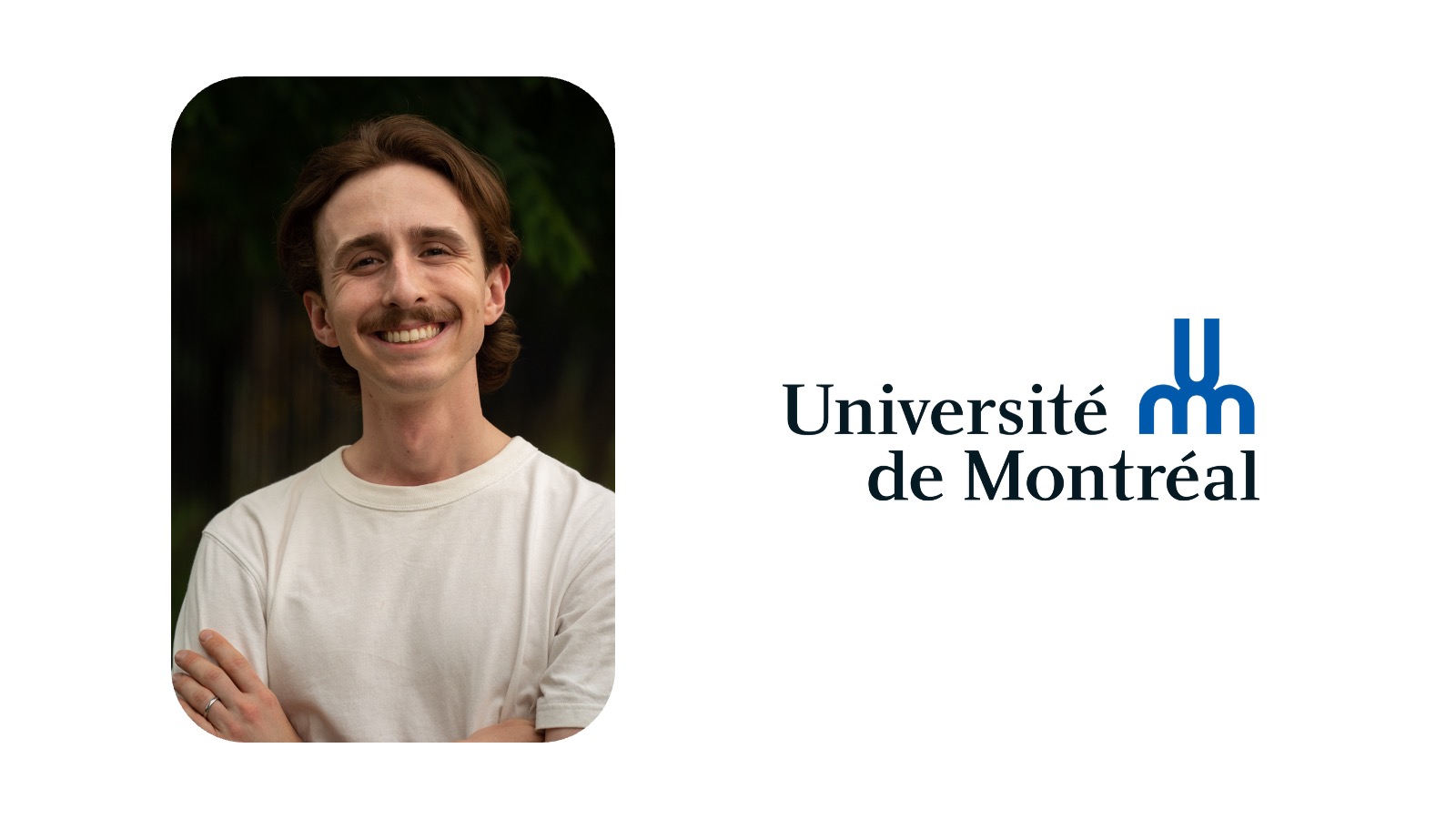
“Doing a PhD is incredibly challenging and can often feel isolating. Looking back, however, what stands out most is the incredible people I had the privilege to meet, learn from, and work with. Over the past five years, I met countless inspiring students, postdocs, and professors. Choosing to build my PhD around collaborations with people I admired and enjoyed working with helped me greatly. It has been one of the most meaningful parts of my graduate experience.” Dr. Pierre-Antoine Bernard
The CAGS-ProQuest Distinguished Dissertation Award recognizes Canadian doctoral dissertations that make unusually significant and original contributions, both to their respective academic communities and to Canadian society at large. The award was established in 1994 and is presented annually by CAGS, with sponsorship support provided by ProQuest. For the 2026 award season, eligible dissertations must have been completed and accepted by the graduate school between 1 January 2025 and 31 December 2025.
As expected, there were many extraordinary nominees for this award and the competition was extremely difficult to adjudicate. CAGS received twenty-two submissions from across Canada in each category, and these were assessed by two independent committees each consisting of nine expert judges.
For the first time in the award’s 25-year history, there was a perfect tie among the top two candidates in each award category. This year, CAGS will celebrate all four winners.
Dr. Shmatko, Dr. Frost, Dr. Black, and Dr. Bernard will each receive a cash prize of $1,500, a certificate of recognition, and an invitation to attend the 64th Annual CAGS Conference, to be held in Regina in November 2026. CAGS congratulates the winners for their tremendous accomplishments!